Nursery materials · Crib bedding · Safe sleep
Wool Crib Mattress Toppers: Materials, Care, and Fit
Wool and cotton can make a crib topper sound appealing to families seeking natural nursery materials. But fiber choice is only one part of the decision. Construction, certification, washing instructions, mattress fit, and—above all—current safe-sleep guidance matter too. Here is what to examine before considering a wool crib mattress topper, and why a natural material is not automatically the right sleep surface for every baby.
Start with the sleep surface, not the fiber
A crib mattress is more than a piece of nursery furniture. It is the base of a sleep space that should be set up to meet current safety recommendations. For babies, public-health guidance emphasizes a firm, flat, non-inclined sleep surface designed for infant sleep, covered only by a tightly fitted sheet. Pillows, quilts, loose blankets, positioners, and other soft objects should stay out of the sleep area.
A mattress topper changes the surface above the mattress. Even a relatively thin, carefully made layer can affect how the sleep surface feels, how securely a sheet fits, or how the full setup corresponds to the mattress manufacturer’s instructions. For that reason, do not assume that a product is suitable for an infant sleep space just because it is described as organic, breathable, natural, or designed for a crib. Check current guidance from trusted public-health sources and ask the mattress manufacturer or your child’s clinician if you are uncertain.
Age information on a product deserves particular attention. A topper might specify use only for children over a certain age. Such a label is not a substitute for safe-sleep guidance, nor does it mean that a product is appropriate for all children above that age. Read the instructions alongside guidance for your child’s developmental stage, and use the item only as its manufacturer directs.
This distinction is especially important for newborns and young infants. A product’s advertised benefits—such as cushioning, moisture management, or temperature regulation—do not establish that it is necessary or appropriate for infant sleep. A simple sleep setup can be both practical and easier to assess: an appropriate mattress, a snug fitted sheet, and no added soft bedding.
What a wool crib topper is made of
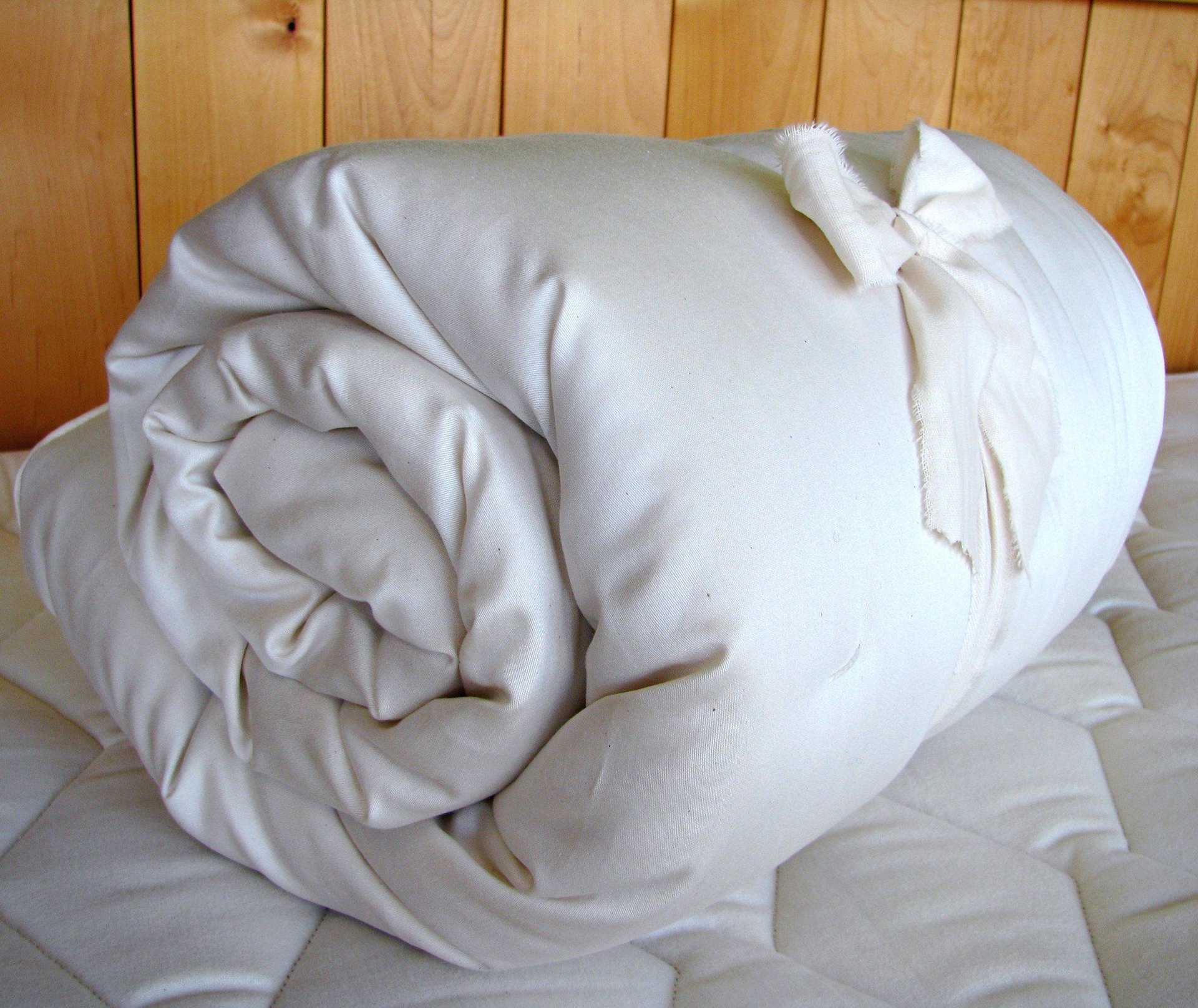
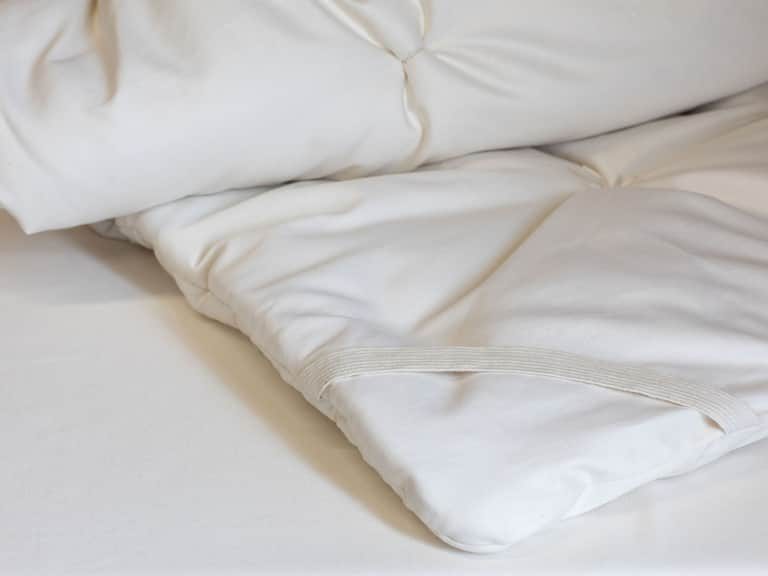
Many wool crib mattress toppers combine wool batting with a fabric cover, often cotton. The batting is the internal layer; the cover contains it and forms the surface that touches the fitted sheet. Quilting or hand-tufting may connect the layers and help limit movement of the fill. Elastic corner straps may be included to hold the topper on a mattress.
Each part deserves its own materials check. “Wool topper” describes only the fill, not necessarily the cover, sewing thread, elastic, dyes, finishes, or every other component. A detailed product description should identify the materials and explain how the item is assembled. If the wording is vague, ask the maker what the cover and fill contain, whether the fabric is dyed or treated, and how the layers are secured.
Wool is a natural animal fiber with qualities often associated with warmth and moisture management. Cotton is a plant fiber commonly used for bedding covers. Their properties may influence comfort and care, but they do not guarantee a particular temperature, prevent overheating, treat allergies, or make a sleep environment safer by themselves. A baby’s comfort depends on the whole setting, including room conditions, clothing, and the items used in the sleep space.
Some toppers are described as breathable or temperature-regulating. Treat these as material or design descriptions, not as medical claims or permission to add bedding to an infant’s sleep surface. If a baby seems too warm or uncomfortable, consider the overall sleep environment and seek appropriate advice rather than relying on a topper to manage temperature.
Read certification claims precisely
Certification can help shoppers understand how specific materials or production stages were assessed. It is useful only when the claim is clear. Look for the name of the certification, the materials or product components it covers, and an explanation of what standard applies. Certification should not be treated as a general guarantee about every aspect of safety, performance, or suitability.
For example, a GOTS claim refers to a textile standard and should be checked against the product’s current documentation. Confirm whether the certification applies to the cotton cover, the wool fill, or both. A product may use certified cotton while describing its wool as natural or responsibly sourced without the wool itself being certified. Those are different claims and should not be blended together.
Terms such as “organic,” “natural,” “chemical-free,” and “non-toxic” can be used in broad ways. Ask what the term means for the specific item. Is the fiber certified organic? Does the claim refer to the raw material, the finished textile, or a particular processing step? Is the description supported by a current certificate or other documentation? Clear answers make comparisons more meaningful than a reassuring label alone.
Certification also does not determine whether the topper fits a particular mattress or complies with safe-sleep recommendations. These are separate questions. A well-documented material claim cannot replace checking dimensions, manufacturer instructions, and the suitability of the complete sleep setup.
Fit: measure carefully and follow both manufacturers
Crib mattress dimensions can vary, and a topper that seems close in size may not fit as intended. Compare the topper’s stated length, width, and thickness with the mattress specifications. Check whether the topper is designed for a standard-size crib mattress or for a particular shape or model. Do not rely on a general label such as “crib size” when precise measurements are available.
Corner straps can help keep a topper positioned, but straps alone do not prove that the sleep surface is secure. Review how the topper is intended to sit on the mattress, whether the manufacturer specifies a particular sheet arrangement, and whether the mattress maker permits an added layer. If the topper bunches, shifts, curls, or changes how the fitted sheet sits, discontinue use until you have verified the setup with the manufacturers.
A fitted sheet should remain snug and should not come loose or form folds. Avoid stretching a sheet over extra layers unless the mattress and bedding manufacturers explicitly say that combination is suitable. Layers can change the overall thickness and fit even when each item is labeled for a crib. Never compensate for an ill-fitting setup by using pins, clips, ties, or improvised fasteners.
Check the product periodically, especially after laundering or moving the mattress. Look for stretched elastic, loose seams, exposed or displaced filling, compressed areas, and changes in shape. A topper that no longer lies flat or stays in place as intended should not be used. Follow the maker’s guidance about inspection, replacement, and whether the item can be used with the mattress model you own.
Care is different from ordinary cotton bedding
Wool needs particular care. Heat, agitation, unsuitable detergents, and rough handling can cause wool fibers to shrink, felt, distort, or lose their loft. A wool topper may not be machine-washable, even if its cotton cover looks like ordinary bedding. Before buying, read the full care instructions and consider whether they suit the way your family uses a crib.
Some wool products call for periodic airing or sunning, with spot cleaning for small marks. Larger spills may require a specific method, such as soaking and spinning without a full wash cycle. Other products may have different instructions. Do not transfer one item’s care method to another: follow the label or written directions for the exact topper you have.
For example, the listed care guidance for the Natural Child’s Crib Mattress Topper calls for periodic sunning and spot cleaning; for large spills, it specifies cold-water soak-and-spin instructions and warns against using the wash cycle, wringing, or machine drying. These details are worth reviewing before purchase, particularly if you expect frequent washing. Always confirm the current instructions supplied with the product.
When cleaning is needed, remove the topper from the crib and follow the manufacturer’s method. Do not put a wet topper back into use before it is fully dry, and do not use heat or cleaning products the instructions prohibit. If the item becomes misshapen, develops an odor that does not clear with the recommended care, or has damage to its seams or cover, contact the manufacturer about whether it remains usable.
Care is not simply a matter of convenience. The way a topper is washed and dried can affect its dimensions and structure, which in turn can affect fit. A product that requires delicate treatment may be a poor practical match for a household that needs bedding capable of frequent conventional machine washing. Planning for that difference can help avoid damage and disappointment.
Comparing wool topper descriptions
When comparing options, focus on details that can be checked rather than broad promises. A clear listing should describe the fill and cover separately, give accurate dimensions, explain the construction, specify any certification, state the intended age or use, and provide complete care instructions. It should also identify how the topper attaches to the mattress and whether the maker has limitations on compatibility.
One available example, the Certified Organic Crib Mattress Topper, is described as having an organic cotton sateen cover, GOTS-certified organic wool batting, hand-tufted construction, and cotton elastic corner straps. Its listed dimensions are 28 by 52 inches, with an approximate depth of one inch, and its stated age guidance is for children over six months. Its care directions call for periodic sunning and spot cleaning. These are product-specific details, not a general recommendation for infant sleep or a substitute for checking the mattress maker’s instructions.
Another listed option, the Natural Child’s Crib Mattress Topper, describes organic cotton sateen and Premium Eco Wool, hand-tufted construction, and corner straps. Its stated care instructions differ from those of some washable cotton bedding, reinforcing the value of checking the exact label before deciding whether a topper suits your needs.
These examples illustrate how to read product information; they should not be taken as endorsements or as evidence that a topper is required. Product descriptions and availability can change. Check the current listing, certification information, instructions, and any age restrictions directly before making a decision.
A practical checklist before considering a topper
- Confirm the sleep guidance: Make sure any planned setup is consistent with current recommendations for your child’s age and development. For infant sleep, prioritize a firm, flat, non-inclined surface and a fitted sheet, with no loose bedding.
- Check age and intended use: Read the product’s age guidance and use limitations. Do not assume an age label overrides public-health advice.
- Measure the mattress: Compare exact dimensions and thickness, and confirm the topper is intended for that mattress type and model.
- Review the full materials list: Identify the fill, cover, stitching, straps, and any finishes or treatments.
- Verify certifications: Find out which components are certified and what the certification covers.
- Assess the construction: Check how the fill is held in place, how the item attaches, and whether the maker provides clear compatibility instructions.
- Read care instructions first: Confirm whether the topper can be washed, how spills are handled, and how it must be dried.
- Inspect after use and cleaning: Look for movement, bunching, loose seams, damaged straps, or changes in shape.
- Ask when details are unclear: Contact the mattress and topper manufacturers rather than guessing about fit or use.
A measured approach to organic nursery materials
Choosing organic or natural materials can reflect a family’s preferences about textiles, sourcing, and manufacturing. It can also prompt useful questions about what touches a baby’s skin and how nursery items are made. Yet the word “organic” does not answer every question parents need to ask. Fit, intended use, cleaning, durability, and safe-sleep guidance remain essential.
Wool crib mattress toppers bring together fibers and construction choices that deserve close inspection. Wool fill, cotton covers, quilting, hand-tufting, elastic straps, and certification each tell part of the story. Care directions tell another: some wool products need airing and spot cleaning rather than routine machine washing. Understanding these details before purchase helps families choose with clearer expectations.
For babies, keep the priority in view: a safe sleep space should follow current public-health recommendations and the instructions for the mattress and crib. A topper is not necessary merely because it is made from natural materials, and a product description cannot establish that an added layer is appropriate for every child. When in doubt, keep the sleep setup simple and seek guidance from a qualified health professional or the product manufacturers.
Editorial note
This article provides general educational information about materials, care, and fit. It is not medical advice and does not replace current safe-sleep guidance, product instructions, or advice from a qualified clinician. Always check the latest recommendations and the specific instructions for your crib, mattress, and bedding.